


How To Travel Between Norwegian Coastal Towns
The Rhythm of the Norwegian Coast
Norway's coastline is a spectacular tangle of fjords, islands, and peninsulas. Travelling between coastal towns is rarely a straight line. It is a sequence of ferries, express boats, and buses, each with its own timetable and character. If you approach it like a train journey in mainland Europe, you will be frustrated. If you treat it as part of the adventure, you will be rewarded. The key is to plan connections carefully and keep journeys unhurried. Allow more time than you think you need. The coast runs on its own clock.
Ferries: The Backbone of Coastal Travel
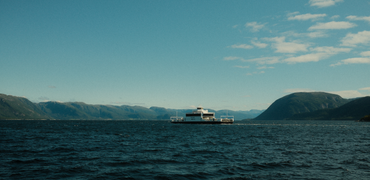
Car ferries are the workhorses of the Norwegian coast. They cross fjords and sounds, often in ten to thirty minutes. Some routes are longer, linking islands where no bridge exists. Most ferries carry both cars and foot passengers. On board, you will find a café, toilets, and comfortable seating. Some even have play areas for children.
If you are driving, book your ferry in summer, especially on popular routes in the fjord region and Lofoten. Foot passengers rarely need to book, but you should still arrive ten to fifteen minutes before departure. Ferries run frequently on main routes, but timetables thin out on Sundays and in winter. Always check the day before.
Express Boats and Catamarans
Express boats, or catamarans, are the fast option. They link towns such as Bergen, Ålesund, and Trondheim, and they reach places that buses cannot. A journey that takes six hours by road might take two by express boat. They are comfortable, with airline-style seating, a kiosk, and luggage racks. Some have Wi-Fi.
They are also more expensive than buses. Book ahead in peak season, as seats sell out. Express boats are often the best choice for island communities and remote fjord villages. But they are less frequent in winter, and some routes are seasonal. Check whether your boat carries bicycles or large luggage. Many do, but not all.
Buses and the Art of Connection
Buses fill the gaps. They run along coastal roads, through tunnels, and over mountain passes. In many places, bus schedules are timed to meet ferries and express boats. That is the good news. The bad news is that rural buses can be infrequent. One or two a day is common. On Sundays, there may be none.
Always check the timetable the day before. Have a backup plan. If a bus is late, the ferry will not wait. Some bus stops are just a sign by the road, so know where you are going. Drivers are usually helpful, but not all speak English. A smile and a place name written down go a long way.
Planning Connections Without the Stress
Use a national journey planner to see the whole picture. But do not trust it blindly. Timetables change, especially in shoulder season. Here are some practical rules:
- Buffer time: allow at least thirty minutes between connections, an hour if transferring from express boat to bus.
- Book what you can: car ferries and express boats in summer, and any long-distance bus.
- Travel light: you will be carrying your bags on and off boats and buses.
- Watch the weather: storms can cancel sailings. Have a flexible plan.
- Off-season: fewer services, but quieter and cheaper. Check winter timetables carefully.
Embracing the Unhurried Journey
The Norwegian coast is not a destination to rush through. The journey is the point. On a ferry, buy a waffle and a coffee, and watch the water. On an express boat, sit outside if you can, and feel the speed. On a bus, chat with locals and watch the landscape shift.
Bring a thermos, a book, and a willingness to wait. Stop in small towns for a night. Eat a fish cake. Walk to the harbour. The coast rewards those who slow down. Plan the connections, then let the journey unfold. That is the Scandinavian way.


Coastal Escapes
-
A simple cabin breakfast of rye bread, boiled eggs, and strong coffee sets up a slow morning, especially when rain taps gently on the roof.
Nordic Food




-

Long established fact that a reader will be distracted
-

Long established fact that a reader will be distracted
-

Long established fact that a reader will be distracted


Fjord Guides
Karla Gleichauf
12 May 2017 at 05:28 pm
On the other hand, we denounce with righteous indignation and dislike men who are so beguiled and demoralized by the charms of pleasure of the moment
M Shyamalan
12 May 2017 at 05:28 pm
On the other hand, we denounce with righteous indignation and dislike men who are so beguiled and demoralized by the charms of pleasure of the moment
Liz Montano
12 May 2017 at 05:28 pm
On the other hand, we denounce with righteous indignation and dislike men who are so beguiled and demoralized by the charms of pleasure of the moment