

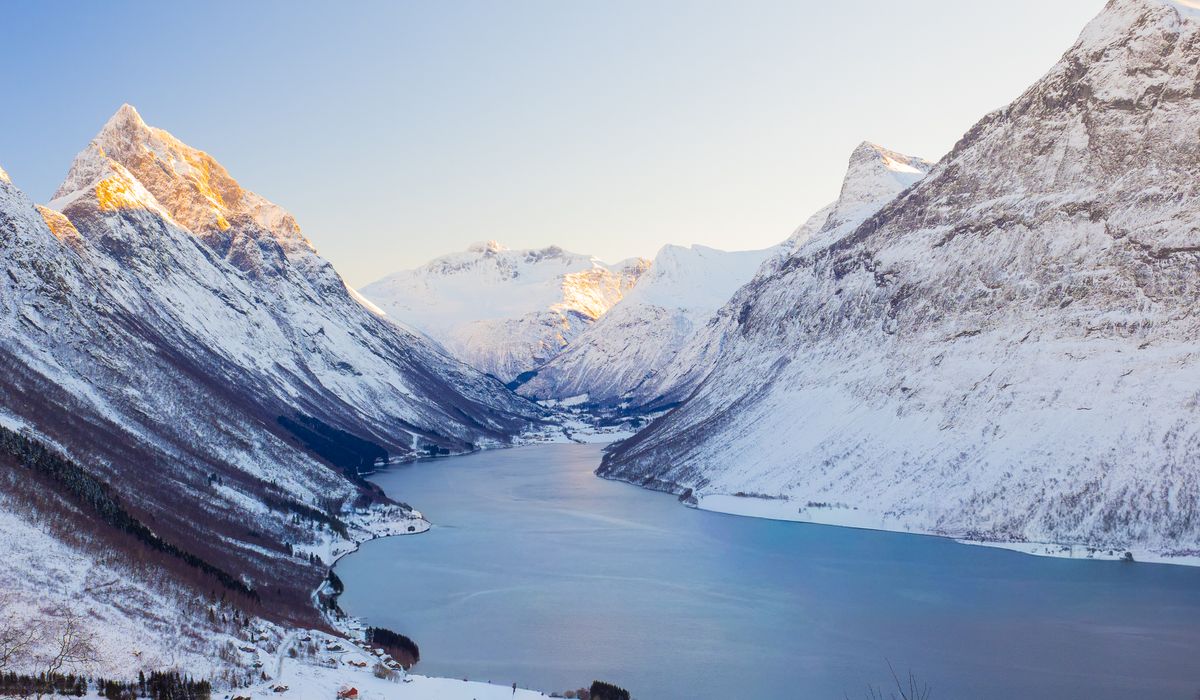
Planning A Spring Ferry Journey Along Norway's Western Fjords
Why Spring Is The Quiet Sweet Spot
Spring along Norway's west coast arrives in stages, and that is precisely its charm — and its complication. In April the snowline is still low, meltwater is thundering down every gully, and towns such as Balestrand, Volda and Florø are pleasantly free of the coach parties that fill them in July. By mid-May the fruit blossom is out in Hardanger and Sogn, the light is extraordinary well into the evening, and the first seasonal fjord crossings begin running again.
The trade-off is that spring is a shoulder season. Some ferries run less often, some cafés and campsites are still shuttered, and the mountain passes between the coast and the interior can close at short notice.
Understanding The Three Kinds Of Boat
It helps to separate the vessels you will use. First, the car ferries that form part of the road network, crossing fjords at twenty-minute intervals on the busiest routes and running from early morning until late at night. Second, the passenger express boats that link coastal towns and are the practical way to travel without a car. Third, the seasonal fjord services that exist largely for the scenery and operate only from roughly May to September.
Spring is when the second and third categories are most volatile. A route that runs six times a day in summer may run twice in April, and the timetable posted at the pier is the one that counts. Check the date you are actually travelling, read the footnotes, and take seriously small print such as "not on 1 May" or "Mondays to Fridays only".
- Book express boat seats for Fridays and Sundays, when locals head home.
- Car ferries rarely need booking outside the main summer weeks, but arrive early anyway.
- Allow at least ninety minutes between a ferry arrival and any onward connection.
What The Weather Will Probably Do
Western Norway is wet, and nowhere more so than the coast north of Bergen. Temperatures at sea level in April sit around 4–8°C, rising to 10–14°C by late May, but wind across open water can knock ten degrees off how that feels. Fjords are usually calmer than the outer coast; exposed stretches such as the approach to Stad or the crossing of Hustadvika are where sailings are most likely to be cancelled.
Rain in spring is often showery rather than persistent, with long bright intervals in between. The practical rule is to plan outdoor time for the middle of the day and keep an indoor option — a museum, a bakery, a long lunch — in reserve.
Packing Layers, Not A Wardrobe
You need three layers, and you need them to work together.
- A thin merino or synthetic base layer, two of them, so one can dry while you wear the other.
- A warm mid-layer — fleece or light down — that packs down small.
- A genuinely waterproof shell with a hood. Not shower-resistant; waterproof.
- A hat and thin gloves, even in May. Deck wind is unforgiving.
- Sturdy shoes with grip for wet pier planks and steep, slippery paths.
- Sunglasses and high-factor sun cream, because glare off water and snow is fierce.
Add a power bank, a refillable bottle, and motion-sickness tablets if you are prone — buy them before you travel, as small pier kiosks may not stock them. Norway is close to cashless, so a card and a phone wallet will cover almost everything.
Small Piers And The Art Of Waiting Well
The little jetties and village quays are where fjord travel becomes human. Departures are called in Norwegian, sometimes only once, and the boat will not wait. Turn up fifteen minutes early, stand where you can see the gangway, and trust the digital board rather than your own assumptions.
When a sailing is cancelled, the operator will usually arrange a replacement bus or move you to the next available boat, but that can mean a wait of several hours. Build a day of slack into the trip before any flight home, and treat delays as time in a place worth being in. There is almost always a café or a sheltered bench with a view.
Slowing Down Ashore
Spring rewards lingering. The bakery counter in a small coastal town — skillingsboller, cinnamon knots, a paper cup of coffee — is a legitimate itinerary item. So is the walk along the shoreline path, or the steep climb to a viewpoint that opens the whole fjord below you.
Use the right to roam responsibly: walk on open land, leave no trace, and close gates behind you. Accommodation is cheaper before mid-June, and guesthouses in places such as Loen, Olden or the villages around the Sognefjord are often happy to collect you from the pier. Book the first and last nights in advance, leave the middle loose, and let the weather and the timetable decide the rest. That is how spring fjord travel works best — not as a schedule to be defeated, but as a rhythm to fall in with.


Coastal Escapes
-
A rainy weekend in a coastal cabin can be cosy and restorative, with board games, local smoked fish, and views over grey water.
Nordic Food




-

Long established fact that a reader will be distracted
-

Long established fact that a reader will be distracted
-

Long established fact that a reader will be distracted


Fjord Guides
Karla Gleichauf
12 May 2017 at 05:28 pm
On the other hand, we denounce with righteous indignation and dislike men who are so beguiled and demoralized by the charms of pleasure of the moment
M Shyamalan
12 May 2017 at 05:28 pm
On the other hand, we denounce with righteous indignation and dislike men who are so beguiled and demoralized by the charms of pleasure of the moment
Liz Montano
12 May 2017 at 05:28 pm
On the other hand, we denounce with righteous indignation and dislike men who are so beguiled and demoralized by the charms of pleasure of the moment